 "Bamako", a 2006 film (in French with English subtitles) and directed by Abderrahmane Sissako of Mali (115 minutes) will be shown at 7 p.m. 7 February as part of the "Africa: Challenge & Hope" film series. The film shows how the private struggles of a Malian couple are paralleled by the public proceedings of an African civil society taking action against the World Bank and the International Monetary Fund. The film is an official selection of the 2006 Cannes Film Festival. A discussion with Michael Martin, director of the Indiana University Black Film Center/Archive will follow the screening on the campus of Indiana University-Purdue University in Indianapolis. Email for more information.
Showing posts with label Mali. Show all posts
Showing posts with label Mali. Show all posts
Wednesday, January 9, 2008
"Bamako" Featured at Film Series
"Bamako", a 2006 film (in French with English subtitles) and directed by Abderrahmane Sissako of Mali (115 minutes) will be shown at 7 p.m. 7 February as part of the "Africa: Challenge & Hope" film series. The film shows how the private struggles of a Malian couple are paralleled by the public proceedings of an African civil society taking action against the World Bank and the International Monetary Fund. The film is an official selection of the 2006 Cannes Film Festival. A discussion with Michael Martin, director of the Indiana University Black Film Center/Archive will follow the screening on the campus of Indiana University-Purdue University in Indianapolis. Email for more information.


Thursday, June 7, 2007
Better crop storage method for Africa
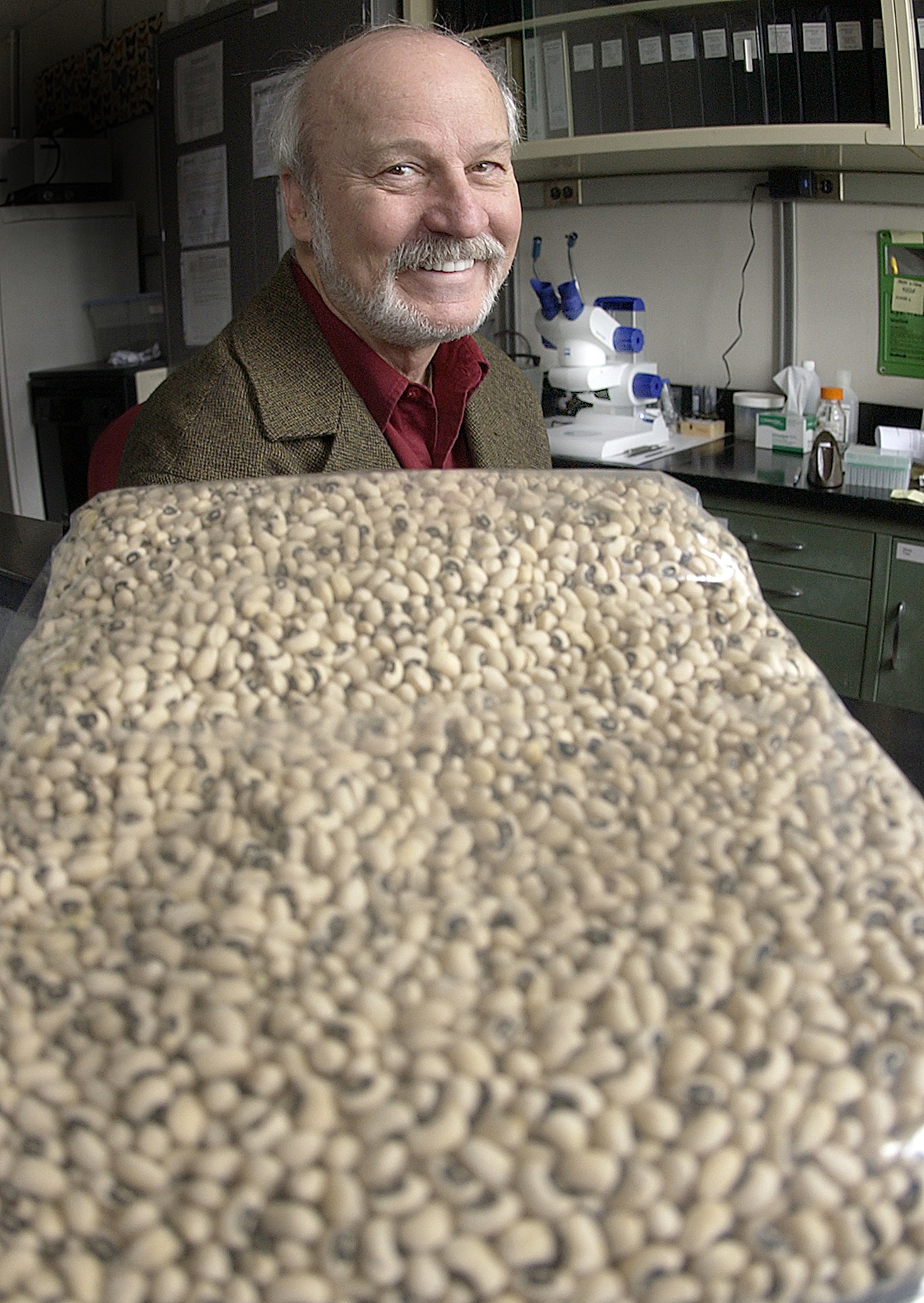
A Purdue University team will help residents of 10 African countries increase their supply of cowpeas thanks to an $11.4 million Gates Foundation grant to Purdue Agriculture.
The five-year project on crop storage will cover the countries of Benin, Burkina Faso, Cameroon, Chad, Ghana, Mali, Niger, Nigeria, Senegal and Togo.
Purdue University entomologist Larry Murdock (at left - with bagged cowpeas!) discovered that cowpea weevils can be controlled if the crop is properly stored. With a one-time cost estimated at a little more than $3 per household, farmers in West and Central Africa will learn how to better protect cowpeas, an important food and cash crop.
Cowpeas, better known in America as black-eyed peas, are marketed by an estimated 3.4 million households in those countries. Even though cowpea yields are low, the legume is one of the few grain crops that can be profitably exported by farmers in this dry, resource-poor part of Africa.
Proven effective in pilot projects, the Purdue-developed hermetic storage method involves triple bagging the cowpeas in plastic and sealing them tight. Not only is the process low-cost - basically the cost of the plastic bags - it's also safer than current practices of either no protection or treating cowpeas with insecticides.
Purdue will work with partners in Africa to recruit and train technicians who will travel from village to village to demonstrate this method for cowpea storage. In addition, the Purdue team will work with manufacturers and suppliers in the region to ensure that appropriate plastic bags are available.
The cowpea is a key crop prioritized in the Alliance for a Green Revolution in Africa's (AGRA) Program for Africa's Seed Systems (PASS), an effort to improve the availability and variety of seeds that can produce higher yields in the often harsh conditions of sub-Saharan Africa.
AGRA is an African-led response to broad calls in Africa for a partnership working across the continent to help millions of small-scale farmers and their families lift themselves out of poverty and hunger. Alliance partnerships focus on key aspects of African agriculture: from seeds, soil health and water to markets, agricultural education and policy.
AGRA is based in Nairobi and supported by the Gates Foundation and the Rockefeller Foundation.
Subscribe to:
Posts (Atom)

